This guide explores the growing demand for eco-friendly chew resistant dog beds in 2026, highlighting durable...
Search in blog
Blog categories
Latest posts
Eco-Friendly Chew Resistant Dog Beds for Sustainable Pets
Read more

Choosing the Perfect Pet Bed to Match Your Home Décor Read more
This guide helps homeowners and businesses choose pet beds that seamlessly blend with interior décor while...
The Role of R&D in Pet Product Innovation Read more
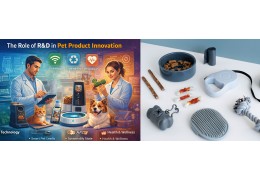
R&D is the engine behind pet product innovation. By working with an R&D pet factory and using custom design...

How to Scale from 500 MOQ to 50K Units Smoothly Read more
Scaling from 500 to 50K units in the pet industry requires the right strategy. With a scalable pet supplier, large...
Inside a Modern Pet Product Factory: Quality You Can Trust Read more
Modern pet factories combine automation, skilled workers, QC pet goods systems, and strict pet product testing to...
Popular posts
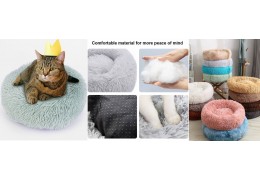
How to Choose the Right Bed Size for Your Cat
Choosing the right bed size for your cat is key to ensuring their comfort and well-being. This guide covers how to...
Read more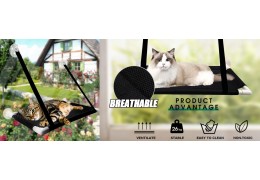
why to clean cat window perch
It is very important to clean the window sill because cats like a clean environment and hygiene to avoid any health...
Read more
what can we bring to your business
We are a world-renowned manufacturing company of the perch. We provide the best solution to your pets, especially...
Read more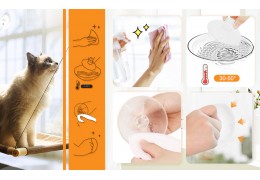
How to remove the suction cup of a cat hammock
My cat hammock sucker is transparent, how to remove the vacuum sucker? How to remove the suction cup of a cat hammock?
Read more
How to clean the window perch?
Window perches are often overlooked in a busy cleaning routine, but they are an important part of keeping your dirt...
Read moreFeatured posts
Eco-Friendly Chew Resistant Dog Beds for Sustainable Pets
This guide explores the growing demand for eco-friendly chew resistant dog beds in 2026, highlighting durable...
Read more Choosing the Perfect Pet Bed to Match Your Home Décor
This guide helps homeowners and businesses choose pet beds that seamlessly blend with interior décor while...
Read more The Role of R&D in Pet Product Innovation
R&D is the engine behind pet product innovation. By working with an R&D pet factory and using custom design...
Read more How to Scale from 500 MOQ to 50K Units Smoothly
Scaling from 500 to 50K units in the pet industry requires the right strategy. With a scalable pet supplier, large...
Read more Inside a Modern Pet Product Factory: Quality You Can Trust
Modern pet factories combine automation, skilled workers, QC pet goods systems, and strict pet product testing to...
Read moreBlog tags
select the right cat bed for your cat slow feeder dog bowls dog feeders perfect cat hammocks buy a cat window perch for your cat favorite cat window perch cat hair trimmer cat window perches best window cat hammock teslin cat window perch petpawjoy cat window seat automatic kitty litter box healthy cat window perch automatic water dispenser for cats best cat hammocks 2022 cuddling your cat cat litter box interactive toys best pet product suppliers
Photo gallery
No featured images
Archived posts
Top authors

The Role of R&D in Pet Product Innovation
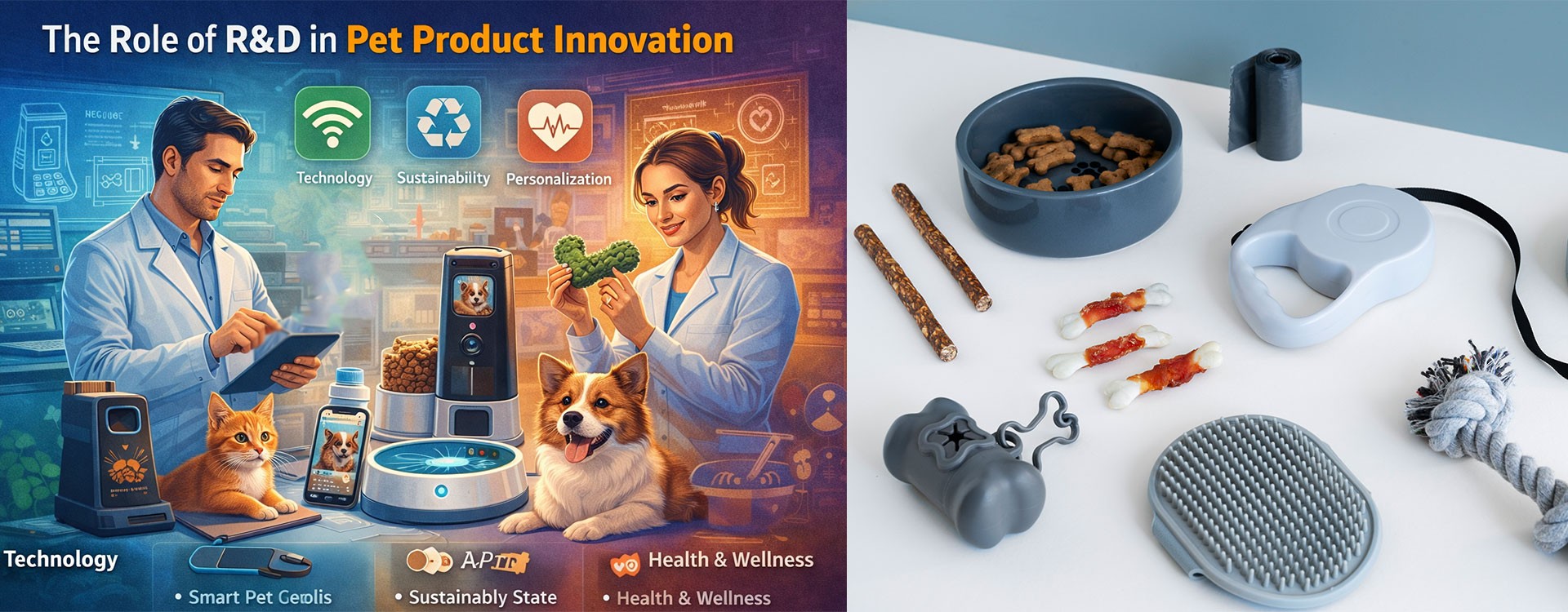
In today’s competitive global market, the pet industry is evolving faster than ever. Companies that succeed are those that prioritize pet product innovation, invest in R&D pet factory capabilities, and partner with suppliers offering custom design OEM solutions. As consumer expectations shift toward sustainability, personalization, and technology-driven pet care, research and development (R&D) is no longer optional—it’s the driving force behind growth and market leadership.
Why R&D Matters in the Pet Industry
The pet market has matured into a multi-billion-dollar sector, covering everything from smart feeders and eco-friendly toys to fashionable accessories. What sets winning brands apart is their ability to anticipate consumer trends and deliver unique products.
• Pet Product Innovation ensures products stand out in crowded categories.
• R&D Pet Factory support gives manufacturers the tools to transform ideas into tangible, tested products.
• Custom Design OEM services allow brands to bring exclusive, branded items to market, securing loyal customers.
Without R&D, brands risk stagnation. With it, they gain agility, creativity, and scalability.
Key Areas of Pet Product Innovation
1. Smart Technology Integration
• GPS collars, automatic feeders, and interactive toys are popular.
• Brands working with an R&D pet factory can ensure these products meet safety and quality standards.
2. Sustainability
• Consumers demand eco-friendly materials like recycled fabrics and biodegradable plastics.
• Custom design OEM services often focus on incorporating sustainable features into production.
3. Personalization
• From engraved collars to breed-specific toys, personalization is a booming niche.
• OEM partners with strong pet product innovation teams offer scalable customization.
4. Health & Wellness
• Chew toys designed for dental care or supplements incorporated into treats represent the future.
• R&D ensures these products are both effective and safe.
The Role of an R&D Pet Factory
A modern R&D pet factory is more than a production site—it’s an innovation hub. These facilities typically provide:
• Material Research: Testing new fabrics, plastics, and sustainable options.
• Prototype Development: Turning product sketches into functional samples.
• Performance Testing: Ensuring durability, safety, and usability.
• Compliance & Certification: Meeting international standards such as CE, ASTM, and FDA.
By combining creativity with scientific rigor, these factories accelerate the pace of pet product innovation and give brands confidence in their launches.
Benefits of Custom Design OEM
For many wholesalers and retailers, sourcing generic products is no longer enough. Success comes from differentiation, and this is where custom design OEM comes in:
• Brand Identity: Exclusive designs reflect a company’s unique positioning.
• Market Protection: Custom products reduce competition in saturated markets.
• Flexibility: OEM suppliers adapt to trends quickly, whether it’s a new style of pet product innovation or seasonal pet gear.
• Scalability: Once a design is approved, an R&D pet factory can produce it in bulk without compromising quality.
For example, a brand may want a smart feeder with app control that also uses recycled materials. Only through OEM collaboration can this kind of hybrid innovation be realized.
R&D as a Competitive Advantage
The integration of pet product innovation, R&D pet factory expertise, and custom design OEM services creates a powerful cycle of growth:
1. Research: Consumer insights drive new product ideas.
2. Development: OEM partners transform concepts into prototypes.
3. Testing: Factories ensure safety, quality, and performance.
4. Launch: Brands go to market with unique, certified products.
5. Feedback Loop: Data from sales and consumer reviews informs the next round of innovation.
This cycle creates long-term differentiation and shields companies from being overtaken by cheaper, generic competitors.
Case Study: Innovation in Action
Imagine a retailer wants to launch a new eco-friendly chew toy line. Here’s how collaboration would work:
• Step 1: Idea Generation
Market research reveals growing demand for sustainable toys.
• Step 2: Partner with an R&D Pet Factory
The factory researches durable, non-toxic, recycled materials.
• Step 3: Custom Design OEM
Designers create unique shapes, textures, and branding options.
• Step 4: Prototype Testing
Toys undergo bite-resistance and safety tests.
• Step 5: Bulk Production
Once approved, the R&D pet factory scales production for wholesale distribution.
This process demonstrates how R&D enables continuous pet product innovation while ensuring market differentiation.
Future Trends in Pet Product Innovation
1. AI & IoT Integration
• Smart collars that monitor heart rate and sleep patterns.
• An R&D pet factory with IoT expertise will dominate this field.
2. Sustainability Leadership
• Zero-waste production and biodegradable toys will define the next wave of custom design OEM.
3. Luxury Pet Lifestyle
• High-end fashion, designer accessories, and tech-driven pet furniture.
4. Globalization of Design
• Wholesalers will source globally but rely on localized R&D to adapt products for different markets.
Conclusion
The future of the pet industry is defined by innovation, sustainability, and personalization. Companies that invest in pet product innovation, collaborate with an R&D pet factory, and embrace custom design OEM strategies will lead the market.
For wholesalers and B2B buyers, this means partnering with suppliers who are not just manufacturers, but innovation partners. The next generation of pet products will be smarter, greener, and more personal—and R&D is the key to making that future a reality.
Posted in: Everything About Pet