This guide explores the growing demand for eco-friendly chew resistant dog beds in 2026, highlighting durable...
Search in blog
Blog categories
Latest posts
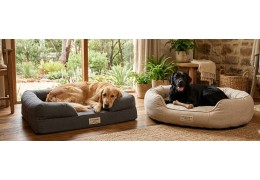
Eco-Friendly Chew Resistant Dog Beds for Sustainable Pets
Read more

Choosing the Perfect Pet Bed to Match Your Home Décor Read more
This guide helps homeowners and businesses choose pet beds that seamlessly blend with interior décor while...
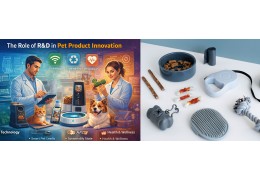
The Role of R&D in Pet Product Innovation Read more
R&D is the engine behind pet product innovation. By working with an R&D pet factory and using custom design...

How to Scale from 500 MOQ to 50K Units Smoothly Read more
Scaling from 500 to 50K units in the pet industry requires the right strategy. With a scalable pet supplier, large...
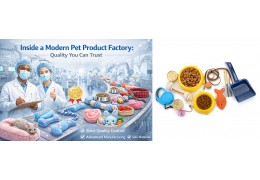
Inside a Modern Pet Product Factory: Quality You Can Trust Read more
Modern pet factories combine automation, skilled workers, QC pet goods systems, and strict pet product testing to...
Popular posts
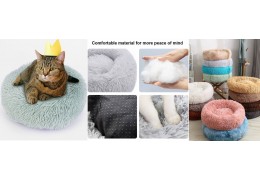
How to Choose the Right Bed Size for Your Cat
Choosing the right bed size for your cat is key to ensuring their comfort and well-being. This guide covers how to...
Read more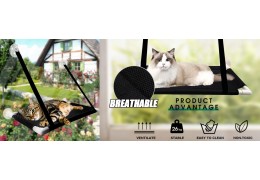
why to clean cat window perch
It is very important to clean the window sill because cats like a clean environment and hygiene to avoid any health...
Read more
what can we bring to your business
We are a world-renowned manufacturing company of the perch. We provide the best solution to your pets, especially...
Read more
How to remove the suction cup of a cat hammock
My cat hammock sucker is transparent, how to remove the vacuum sucker? How to remove the suction cup of a cat hammock?
Read more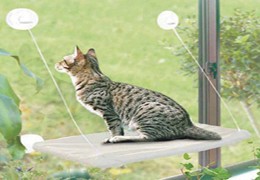
How to clean the window perch?
Window perches are often overlooked in a busy cleaning routine, but they are an important part of keeping your dirt...
Read moreFeatured posts
Eco-Friendly Chew Resistant Dog Beds for Sustainable Pets
This guide explores the growing demand for eco-friendly chew resistant dog beds in 2026, highlighting durable...
Read more Choosing the Perfect Pet Bed to Match Your Home Décor
This guide helps homeowners and businesses choose pet beds that seamlessly blend with interior décor while...
Read more The Role of R&D in Pet Product Innovation
R&D is the engine behind pet product innovation. By working with an R&D pet factory and using custom design...
Read more How to Scale from 500 MOQ to 50K Units Smoothly
Scaling from 500 to 50K units in the pet industry requires the right strategy. With a scalable pet supplier, large...
Read more Inside a Modern Pet Product Factory: Quality You Can Trust
Modern pet factories combine automation, skilled workers, QC pet goods systems, and strict pet product testing to...
Read moreBlog tags
select the right cat bed for your cat slow feeder dog bowls dog feeders perfect cat hammocks buy a cat window perch for your cat favorite cat window perch cat hair trimmer cat window perches best window cat hammock teslin cat window perch petpawjoy cat window seat automatic kitty litter box healthy cat window perch automatic water dispenser for cats best cat hammocks 2022 cuddling your cat cat litter box interactive toys best pet product suppliers
Photo gallery
No featured images
Archived posts
Top authors

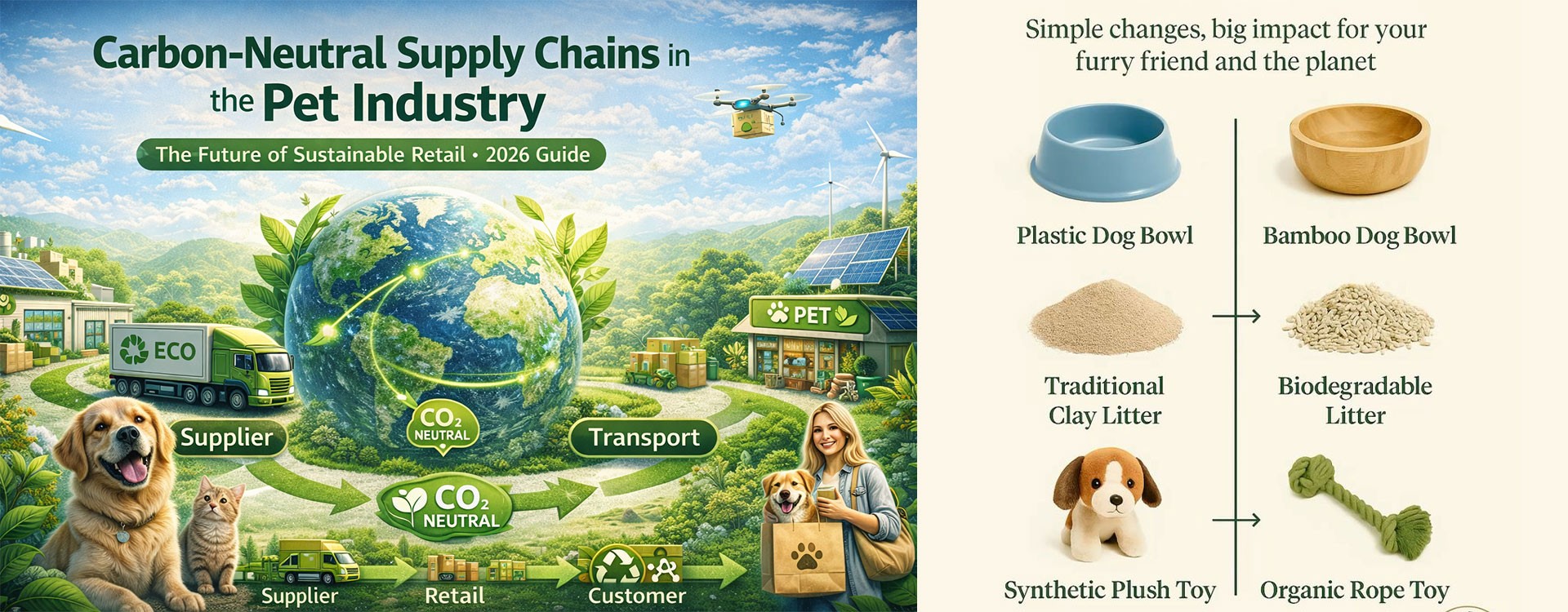
Carbon-Neutral Supply Chains in the Pet Industry: The Future of Sustainable Retail (2026 Guide)
Introduction: Sustainability Takes Center Stage
In 2026, the pet industry is redefining sustainability through innovation in production and logistics. From sourcing to delivery, businesses are focusing on reducing carbon footprints and implementing environmentally friendly operations. Today, the combination of a carbon neutral factory, eco pet logistics, and a green supply chain has become essential for wholesalers and retailers who want to stay competitive in a market increasingly driven by eco-conscious consumers.
The pet products sector—once reliant on plastics and high-emission shipping—now leads the way in sustainability. This article explores how the industry is adopting carbon-neutral solutions, the benefits for businesses, and the future of supply chain innovation in wholesale pet products.
Why Carbon-Neutral Supply Chains Matter in the Pet Industry
Rising Consumer Awareness
Pet owners in Europe are more eco-aware than ever. Studies show that 68% of consumers prefer eco-friendly pet products and are willing to pay a premium for brands aligned with sustainability.
Regulatory Pressure
The European Union has set ambitious carbon-reduction targets for 2030. Retailers and wholesalers must comply by adopting sustainable manufacturing, logistics, and packaging practices.
Industry Responsibility
The pet industry is estimated to generate millions of tons of CO₂ annually. Transitioning to carbon neutral factories and eco pet logistics reduces this environmental burden significantly.
What is a Carbon Neutral Factory?
A carbon neutral factory is a production facility that offsets or eliminates its carbon emissions through a combination of renewable energy, energy efficiency, and carbon offset programs.
Key Features of a Carbon Neutral Factory
• Renewable Energy Use – solar, wind, or hydro power.
• Energy-Efficient Equipment – automated systems to reduce waste.
• Carbon Offsetting – investment in reforestation or carbon capture programs.
• Closed-Loop Production – reusing waste materials to reduce landfill impact.
Benefits for Pet Product Manufacturing
1. Lower operating costs in the long run.
2. Improved brand image among eco-conscious buyers.
3. Compliance with EU sustainability regulations.
4. Attraction of wholesale clients seeking green supply chain partners.
Eco Pet Logistics: The New Standard in Distribution
Eco pet logistics refers to sustainable transportation, warehousing, and packaging practices that minimize emissions across the pet product supply chain.
Key Practices in Eco Pet Logistics
• Electric Vehicle (EV) Fleets – using EV trucks and vans for distribution.
• Optimized Shipping Routes – AI-driven logistics that minimize travel distance.
• Eco-Friendly Packaging – compostable or recyclable shipping materials.
• Consolidated Deliveries – reducing the number of trips by combining shipments.
Case Example: Wholesale Pet Deliveries
A large EU distributor reduced emissions by 40% after switching to biofuel-powered trucks and consolidating shipping routes. This highlights how eco pet logistics cuts costs and lowers environmental impact.
Building a Green Supply Chain in the Pet Industry
A green supply chain integrates sustainability at every stage—from raw materials to final product delivery.
Steps Toward a Green Supply Chain
1. Sustainable Sourcing – choosing suppliers with eco-certifications.
2. Carbon-Neutral Production – adopting carbon neutral factory models.
3. Green Logistics – implementing eco pet logistics solutions.
4. Recyclable Packaging – using compostable, biodegradable, or refillable packaging.
5. Waste Reduction – adopting circular economy principles.
Advantages for Retailers & Wholesalers
1. Stronger customer loyalty from eco-conscious shoppers.
2. Competitive edge against traditional suppliers.
3. Long-term profitability from reduced waste and efficiency.
Case Studies: EU Companies Leading the Way
Small Independent Pet Brands
A boutique brand in Denmark shifted to green supply chain practices by sourcing from local carbon neutral factories, reducing shipping emissions by 30%.
Large Retail Chains
Zooplus, one of Europe’s largest online pet retailers, now uses eco pet logistics through electric delivery fleets in major cities, setting the standard for industry-wide sustainability.
Challenges in Achieving Carbon Neutral Supply Chains
High Initial Investment
Transitioning to renewable energy, electric fleets, and carbon neutral factories requires upfront capital.
Supply Chain Complexity
Not all suppliers are equipped to meet green supply chain requirements, especially in developing markets.
Consumer Education
Some customers still prioritize cost over sustainability. Retailers must educate them on the long-term benefits of eco-friendly purchases.
Future Trends: What’s Next for 2026 and Beyond?
AI-Powered Logistics
AI-driven platforms are optimizing delivery routes, significantly lowering emissions from transport.
Blockchain for Transparency
Retailers will use blockchain to track and verify sustainability claims across the green supply chain.
Circular Economy in Pet Products
Manufacturers are adopting return and recycling programs for used pet products, creating a zero-waste model.
How Wholesalers Can Transition to a Carbon-Neutral Supply Chain
Step 1: Partner with Carbon Neutral Factories
Ensure that manufacturers align with your eco goals by using renewable energy and certified offsets.
Step 2: Adopt Eco Pet Logistics
Work with logistics providers that use electric fleets, biofuels, and optimized shipping models.
Step 3: Audit Your Green Supply Chain
Conduct regular sustainability audits to ensure compliance and efficiency improvements.
Step 4: Market Your Sustainability
Promote eco certifications on packaging and online platforms to attract environmentally conscious retailers and consumers.
FAQs on Carbon-Neutral Supply Chains
Q1: What is a carbon neutral factory in the pet industry?
It’s a production facility that offsets or eliminates emissions using renewable energy and carbon reduction programs.
Q2: How does eco pet logistics reduce emissions?
By using electric fleets, route optimization, and sustainable packaging to cut carbon output.
Q3: What makes a supply chain green?
Sustainable sourcing, renewable production, low-carbon transport, and recyclable packaging.
Q4: Are carbon-neutral supply chains more expensive?
Initial costs are higher, but long-term savings and brand loyalty offset them.
Q5: Do EU customers prefer eco-friendly supply chains?
Yes—over 65% of EU consumers prefer products from companies with a green supply chain.
Q6: How can retailers verify sustainability claims?
By checking certifications like ISO 14001, EU Ecolabel, and GRS (Global Recycled Standard).
Conclusion: The Future is Carbon-Neutral
The pet industry is evolving rapidly, and the adoption of a carbon neutral factory, eco pet logistics, and a green supply chain is no longer optional—it’s the future. Wholesalers and retailers who embrace these practices in 2026 will not only comply with EU regulations but also build stronger, more profitable businesses.
By prioritizing sustainability today, the pet industry is paving the way for a cleaner, greener tomorrow—for pets, people, and the planet.
Posted in: Everything About Pet